India’s Market Liquidity Eases Foreign Investor Exits Amid Sector Shifts
Foreign portfolio investor outflows accelerate in India as liquidity enables quick exits, even as local funds continue to pour capital into equities.
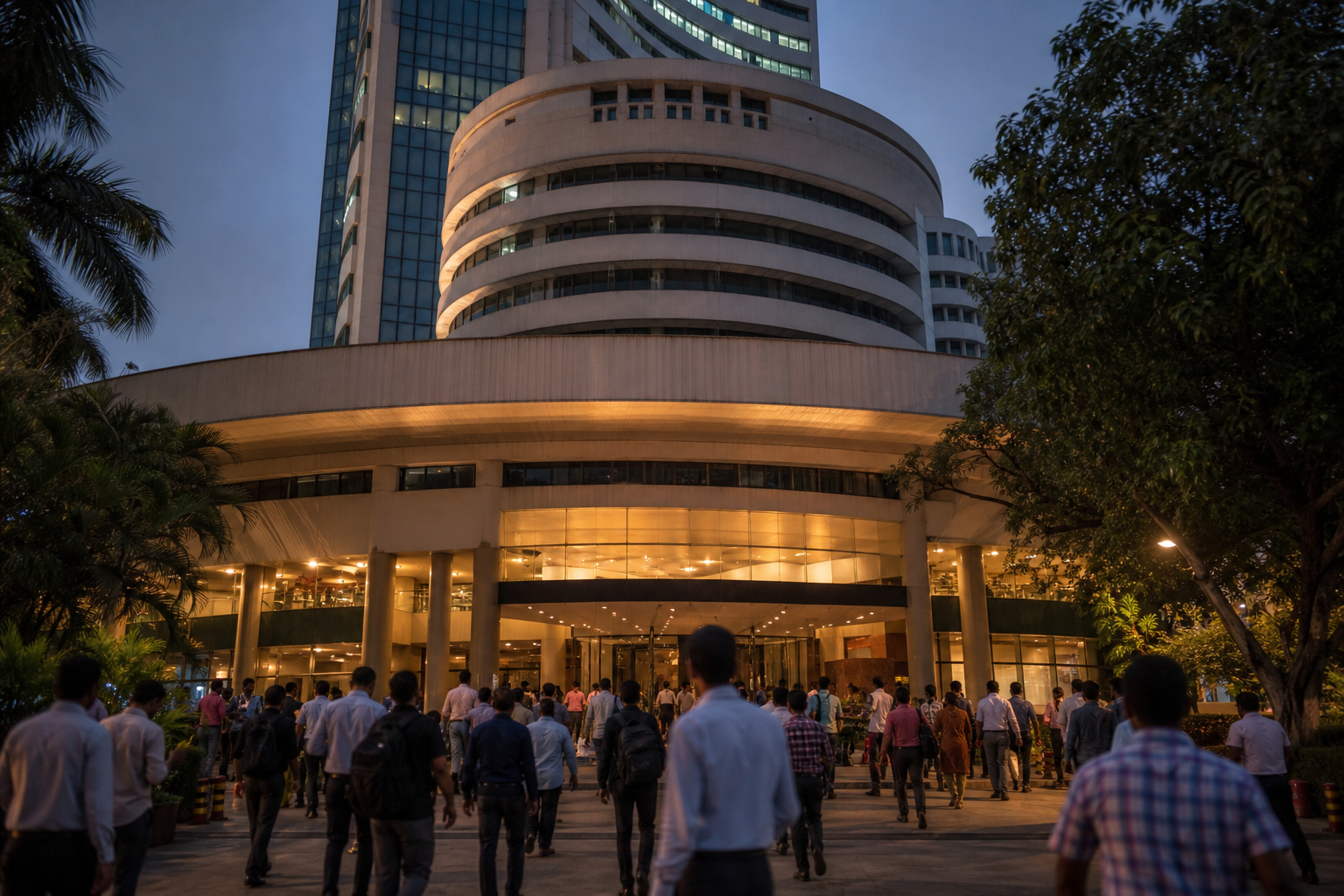
Investor exits from India’s equity markets have intensified in recent months, with foreign portfolio investors (FPIs) accelerating outflows amid highly liquid local markets. This trend, highlighted by Finance Minister Nirmala Sitharaman during the IMF-World Bank meetings in October 2026, comes as India’s benchmark indices have fallen nearly 12% since January, despite resilient economic growth, according to CNBC.
Foreign Outflows and Market Liquidity
The high degree of liquidity in India’s equity markets, supported by strong domestic mutual fund activity, has enabled FPIs to exit positions smoothly. Sitharaman stated, “Because of the ease of liquidity, ease of availability, people are even exiting easily.”
In 2026, foreign portfolio investors have sold more than $33 billion of Indian equities so far this year, according to Indian depository firm NSDL, as reported by CNBC. This significant outflow comes at a time when global capital has shifted toward artificial intelligence-driven opportunities in the U.S. and Northeast Asia. According to a Goldman Sachs report cited by CNBC, India’s share in the MSCI Asia Pacific ex-Japan index has compressed from 19% a few years ago to 10%, while Taiwan’s has risen to 29% and Korea’s to 22%.
Continued Inflows from Domestic Capital
Despite persistent FPI outflows, domestic capital has remained a stabilizing force. Indian equity mutual funds have recorded net inflows every month since March 2021, based on figures from the Association of Mutual Funds in India noted by CNBC. Between 2021 and 2025, Indian initial public offerings collectively raised $60.4 billion, with $37.7 billion, or 63% of proceeds, going to existing holders who sold their shares to the public, according to an August EY report referenced by CNBC. Sellers included multinational companies, private equity funds, and foreign investors, often able to make partial or full exits at a premium.
Capital Flows, Sector Exposure, and Economic Risks
Sitharaman highlighted access to capital, alongside fuel and fertilizer costs, as key risks for India’s economic outlook toward 2027. She commented that the global flight of capital toward AI and U.S. opportunities, otherwise destined for diverse sectoral investments around the world, remains "a concern."
Although the AI rally has begun to show cracks, Sitharaman said India would not be “hurt” by any spillover should an AI bubble burst, noting that India has not received the "AI kind of investments coming into different jurisdictions." India is investing to catch up in technology sectors, including efforts in semiconductor manufacturing. While the country missed the speculative inflows tied to AI developments in markets like Taiwan and Korea, some portfolio managers now see India as an alternative to the AI boom, which can shield or isolate India’s market based on global sentiment, according to CNBC.
Domestic inflows, FPI flows and IPOs
The coming months will see close attention paid to domestic fund inflows, further FPI movements, and IPO activity that could influence the liquidity dynamic. Changes in global macroeconomic conditions, such as movements in fuel and fertilizer prices or AI-related sentiment, could have immediate impacts on portfolio allocations.
Forthcoming communication from India’s finance ministry or central bank could offer further insight into strategies for strengthening access to capital and defending against external shocks. Meanwhile, tracking the performance of major indices like the Nifty 50 and Sensex in relation to Asian benchmarks will be crucial for assessing the balance between domestic resilience and exposure to broader global trends. In the near term, high liquidity continues to make investor exits easier, though persistent foreign outflows remain a risk for India’s financial markets.
Source: cnbc.com