Asia Market Rout Signals AI-Led Volatility as Chipmakers, China Stocks Slide
Asian equities fell as concerns over AI investment returns and weak chipmaker earnings pressured markets, pushing key indices near bear territory.
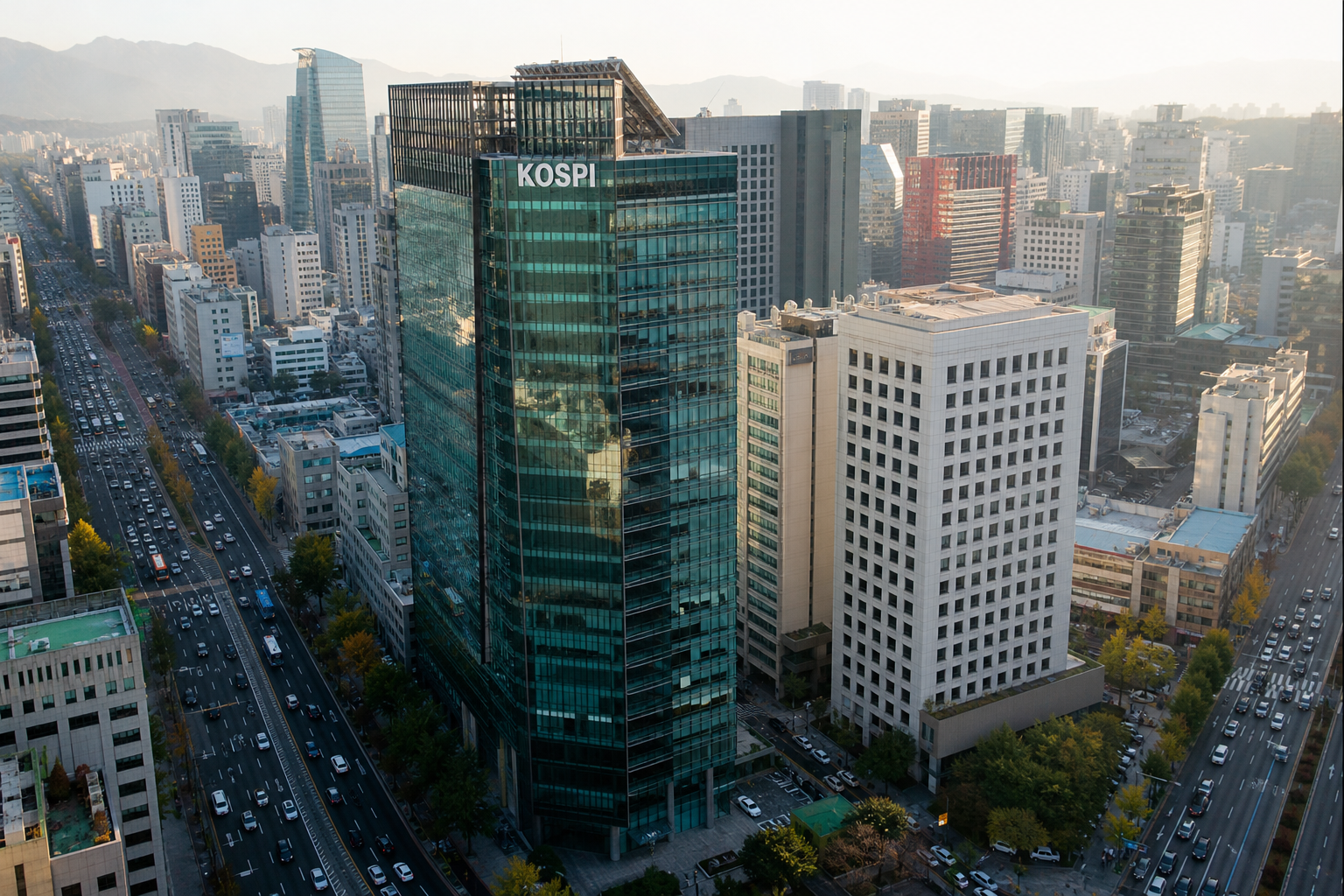
Asia-Pacific markets broadly declined on Thursday, reflecting increased investor concern over the profitability of large-scale artificial intelligence (AI) investment and renewed weakness in semiconductor shares. According to Investing.com, the MSCI Asia Pacific index fell around 1%, with significant losses in South Korea, Japan, and China leading the slide.
Chipmaker and Tech Losses Dominate Declines
South Korea’s KOSPI dropped 3.5%, driven by heavy selling in major chipmakers: SK Hynix plunged 4% and Samsung Electronics fell 3.6%. Japanese firms linked to chip production also suffered, with Kioxia down 3.3% and Murata Manufacturing declining 2.1%. Taiwan Semiconductor Manufacturing slipped 0.6%, and Foxconn dropped 1%. These losses followed mixed earnings from major U.S. technology companies. U.S. semiconductor equipment maker Lam Research fell 7.4% after issuing a weaker-than-expected earnings outlook. Investing.com notes that the Philadelphia Semiconductor Index recently endured an eight-session losing streak, its longest since October 2008.
Valuation Pressures and AI Investment Doubts
Investor skepticism toward the scale of recent spending on AI infrastructure remained elevated, as questions persist about whether investments in data centers and computing power will deliver sufficient returns. Higher financing costs and stretched valuations have added to concerns over a potential AI bubble. Last week, the Nasdaq 100 index dropped 5.5%, marking its steepest weekly decline since April 2025. Meta Platforms, however, rose 2.2% after raising its AI spending outlook, while Tesla shares declined 3.3% in after-hours trading after the company cut its capital-spending forecast.
China and Regional Markets Under Strain
Mainland Chinese markets continued to weaken amid fading hopes for stimulus, lackluster earnings, and ongoing anxieties tied to the global AI trade. The CSI 300 index slid as much as 1.6% during Thursday’s session, bringing its losses since June to around 20% and putting it on the edge of a technical bear market. Alibaba led e-commerce declines after increased government scrutiny, with its shares falling 5.5%. JD.com lost 4.2%, Meituan dropped 3.9%, and Tencent fell 3%. Other Chinese technology names also came under pressure: MiniMax dropped 6.8%, Z.AI lost 8.9%, and ChangXin Memory Technologies was down 4.1%.
Elsewhere in the region, Japan’s Nikkei 225 lost 2.4%, Hong Kong’s Hang Seng dropped 3%, Australia’s S&P/ASX 200 fell 0.3%, New Zealand’s NZX 50 declined 0.4%, and Singapore’s Straits Times Index slipped 0.2%. India’s Nifty 50 futures fell 0.3%. In contrast, Indonesia’s Jakarta Composite Index rose 1.1%, rebounding after plunging more than 11% last Friday following a proposed MSCI market reclassification.
Isolated Bright Spots Amid Broad Market Weakness
Despite widespread skepticism toward AI-driven investments, select companies have managed notable gains. South Korea-based neocloud provider Elice Group rose for a second consecutive session, gaining as much as 25% to reach 99,900 won in Seoul, moving above its IPO price for the first time since its listing. Elice shares had surged 30% on Wednesday, reaching the daily price limit, after dropping about 32% during Tuesday’s debut.
South Korea’s central bank kept borrowing costs unchanged after two consecutive rate increases as policymakers weighed inflation in a semiconductor-driven upswing.
The volatility in AI, semiconductor, and technology-related shares across Asia reflects an uncertain near-term earnings outlook and the risks tied to recent capital spending in these sectors.
Source: finance.yahoo.com