Asia Chipmakers Lead Market Rebound on Strong Super Micro, SpaceX Earnings
Chipmaker shares in Asia surged after upbeat earnings from Super Micro Computer and SpaceX restored confidence in the AI supply chain.
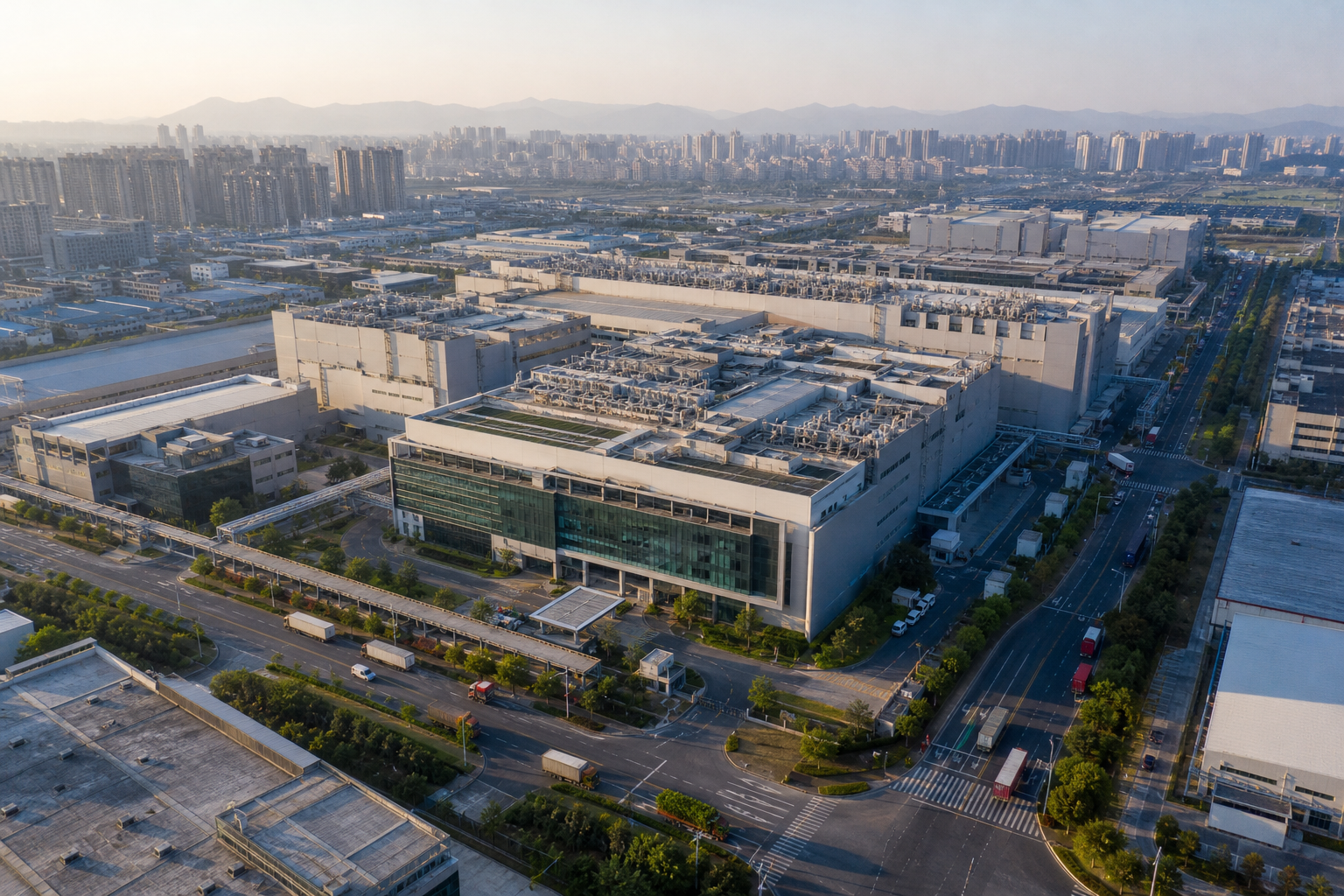
Asian equity markets posted notable gains as semiconductor manufacturers rebounded, driven by stronger-than-expected earnings from Super Micro Computer and SpaceX, according to Investing.com. This marks a reversal from last week’s selloff, with the MSCI Asia Pacific index up 1.1%, led by outperformance in South Korea and Taiwan.
AI-Linked Earnings Power Recovery
The rally in Asian chipmakers was catalyzed by preliminary earnings from Super Micro Computer, which projected revenue significantly above previous guidance, and by SpaceX’s report of strong top- and bottom-line growth, attributed in part to expansion in its artificial intelligence business. Super Micro Computer said it expected quarterly revenue of $18.5–$19.5 billion, well ahead of its earlier $14.5–$15.5 billion range. SpaceX reported quarterly revenue of $14.6 billion, representing a 161% year-over-year increase, with $4.4 billion in profit.
These results helped stem anxiety about the AI supply chain, where investor sentiment had soured due to concerns over high valuations, ongoing financing pressures, and the substantial capital outlays required for AI infrastructure. Improved confidence in the durability of AI-driven demand has lifted not only U.S. tech names but also their suppliers and regional analogs across Asia.
Broad-Based Chipmaker Gains
Within the region, South Korea’s KOSPI jumped 3.7%, with Samsung Electronics climbing 7.1% and SK Hynix up 6.2%. Taiwan's Taiex rose around 1.4%, led by Taiwan Semiconductor Manufacturing Company, which advanced 0.8%, and Largan Precision, up 3.8%. In Japan, the Nikkei 225 gained more than 1%, as chip-related companies Kioxia and Murata Manufacturing added 3.2% and 3.4%, respectively. The rebound signals that investors interpret the upstream demand for AI hardware as broad-based, at least in the near term, with the supply chain exposure in these economies viewed as a net positive.
Divergent Moves in AI Infrastructure
Despite a broad rally in major semiconductor stocks, performance among AI infrastructure businesses was mixed. South Korea’s Elice Group, a data center and AI infrastructure firm, surged around 30% in Seoul, rebounding after one of the country's weakest IPO debuts on record, which saw its shares open 16% below their offering price and fall up to 33% on Tuesday. In contrast, Australia’s NextDC fell around 40% after cutting its financial outlook as delays to electricity-network upgrades at its Melbourne M3 data center postponed contracted capacity and revenue.
Elsewhere in Asia, macro data and stock performance were mixed. Japan reported September trade data that missed forecasts, with exports and imports both weak and the trade deficit widening more than anticipated. Hong Kong’s Hang Seng fell 0.2%, mainland China's CSI 300 slipped 0.7% and the Shanghai Composite lost 0.4%. Australia's S&P/ASX 200 eased 0.1%, while New Zealand's NZX 50 rose 0.7%, and Singapore's Straits Times Index gained 0.8%. Indonesia's Jakarta Composite fell 1.12%, while India's Nifty 50 futures declined 1.1%.
Notably, shares of Contemporary Amperex Technology (CATL), the world’s largest EV battery maker, slumped 8% to a 15-month low after reporting weaker-than-expected third-quarter earnings, as profit growth slowed to its weakest pace in nearly two years amid cooling Chinese auto sales and intensifying competition.
Meta Platforms and Tesla are due to report earnings later on Wednesday, with investor focus on AI investment strategies and consumer demand updates. Wall Street was mixed overnight, with the Dow Jones rising 1%, the S&P 500 gaining 0.3%, and the Nasdaq Composite little changed; in Asian trading, Nasdaq 100 futures climbed 1% and S&P 500 futures advanced 0.4%. These corporate results are expected to heavily influence sentiment around AI-driven capital spending in coming sessions.
Source: finance.yahoo.com