10-Year Treasury Yield Falls as Democrats Win Congress and Oil Prices Drop
The 10-year Treasury yield fell to 4.898% as traders weighed Democratic midterm victories and an 8% drop in crude oil futures.
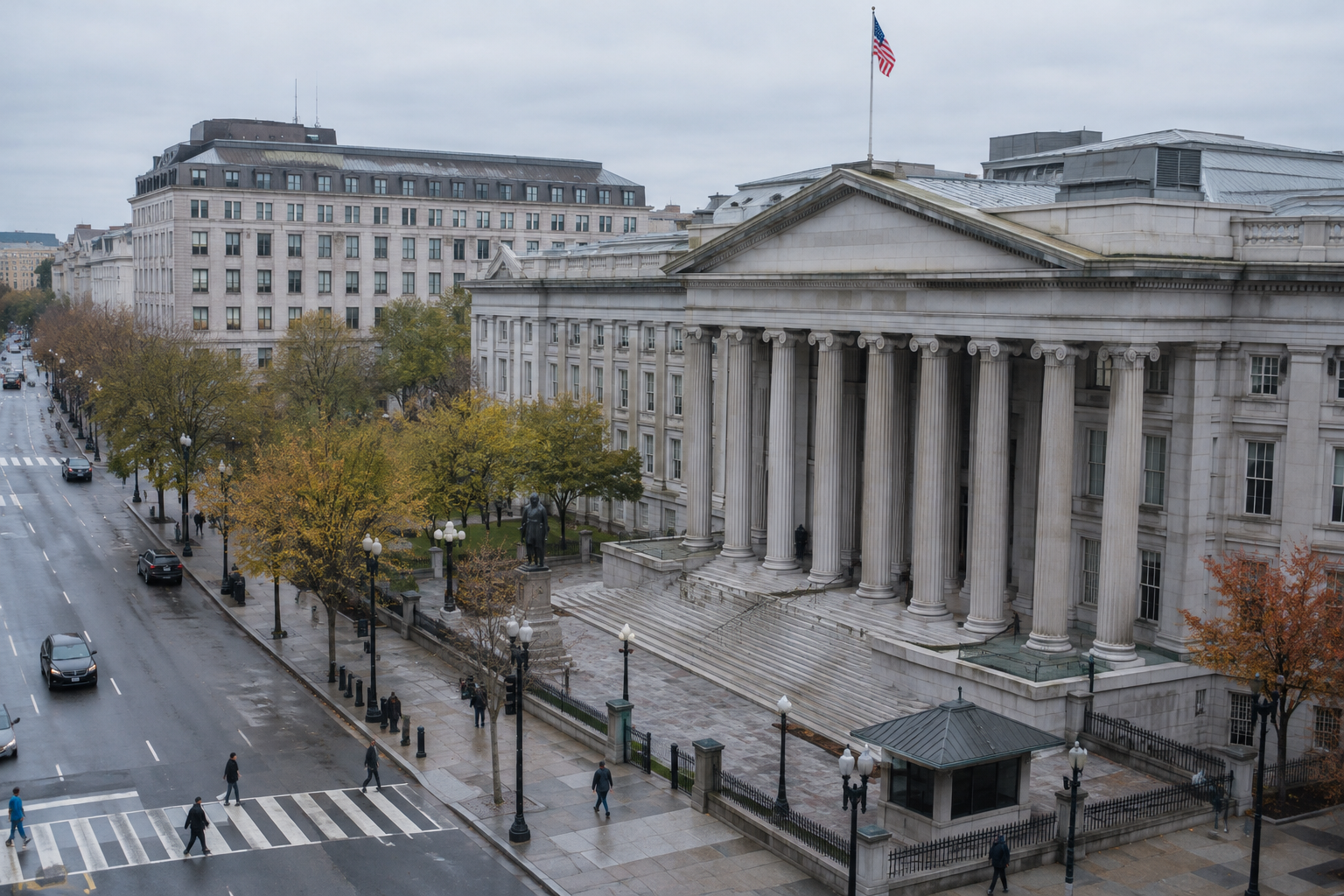
The 10-year Treasury yield fell more than 5 basis points to 4.898% on Wednesday as investors weighed Democratic victories in the U.S. midterm elections and a pullback in oil prices, CNBC reported.
Democrats won majorities in both the House and Senate, creating a divided government under President Donald Trump. Traders at JPMorgan identified reduced deficit spending as one issue drawing Wall Street’s attention after the election.
Treasury yields fell across three maturities
The decline in the benchmark 10-year yield was accompanied by drops in shorter- and longer-dated Treasurys. The 2-year note yield fell more than 4 basis points to 4.573%, while the 30-year bond yield declined more than 3 basis points to 5.293%, according to CNBC.
At those levels, the 2-year yield was below the 10-year yield, and the 30-year yield was above it. Each of the three yields declined by more than 3 basis points.
A basis point is one-hundredth of a percentage point. Bond yields and prices move in opposite directions, so a decline in yield corresponds to a rise in price. BondBloxx investment strategist JoAnne Bianco described the response to the election as a stronger Treasury market.
Democrats flipped seven Senate seats
Democrats flipped Senate seats previously held by Republicans in Iowa, Kansas, North Carolina, Ohio, South Carolina, Maine and Texas. The party also won key gubernatorial races in Ohio and Texas, according to CNBC.
The victories gave Democrats majorities in both chambers of Congress. With Republicans holding the White House, the results put control of Congress and the presidency in the hands of different parties.
The Democratic majorities could restrain spending by the Trump administration by making it harder for the White House to push legislation through Congress, CNBC reported. The election results put the implications for federal spending and the deficit in focus for traders.
JPMorgan traders cited reduced deficit spending
JPMorgan traders said one of Wall Street’s areas of focus after the midterms was “reduced deficit spending.” They said that could be achieved “by asserting power over the budget and likely wading through a government shutdown.”
Bianco said a stronger Treasury market in response to the election “makes sense.” She said that “a more divided policy environment should make deficit growth more difficult and potentially improve the fiscal outlook.”
The JPMorgan traders and Bianco pointed to the budget implications of the election, while Bianco also said attention would shift back to geopolitics and the health of the U.S. economy. She addressed the potential effect of tensions with Iran on energy prices and inflation.
Oil futures fell 8% as Iran remained in focus
U.S. West Texas Intermediate crude futures fell 8% to around $88 a barrel on Wednesday, while Brent crude futures declined 8% to roughly $94 a barrel, CNBC reported. Both benchmarks fell by the same percentage, with Brent trading at the higher reported price.
Vice President JD Vance blamed the Iran war for the Republican Party’s election losses, according to CNBC. Oil prices fell on the same day that traders were assessing the midterm results and their potential implications for government spending.
Bianco said there appeared to be no immediate move toward escalating tensions with Iran. That should help keep energy prices and inflation pressures contained, she said. Her comments linked the geopolitical situation to the economic factors she expected to draw attention after the election.
Source: cnbc.com